
The Pub That Anticipates Everyone
The pies, alcohol-free drinks and house rules were visible before I had to ask.
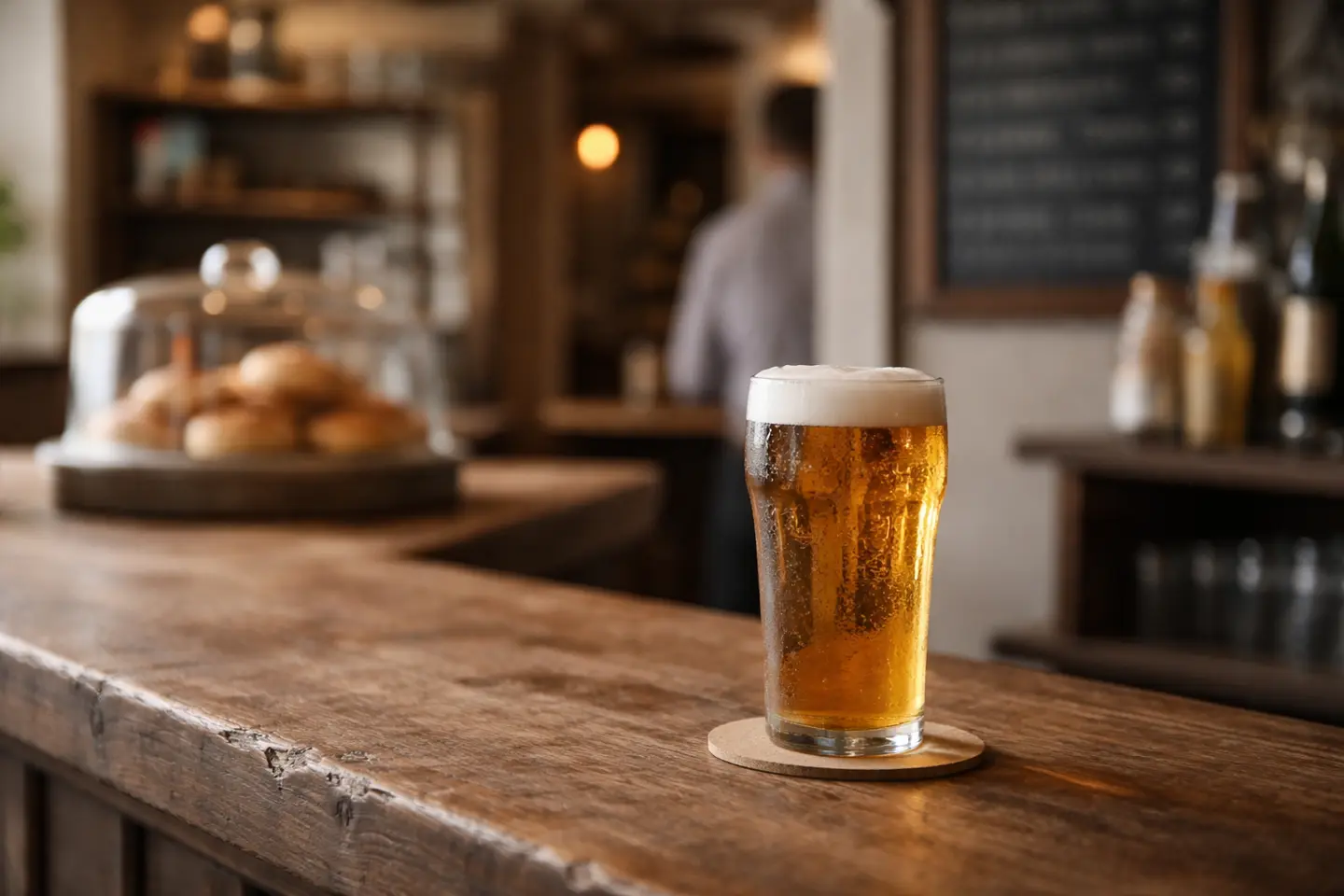
Halfway through a long walk, I stopped for a quick pint.
It looked like a proper local pub, which was exactly what I wanted. But walking into an unfamiliar local usually involves a little bit of reconnaissance. What food do they do? Is there anything alcohol-free? Could you get a coffee here without it feeling like an odd request? What about dogs or children?
Except I didn’t actually have to ask any of those things.
On the bar was a cabinet of pies and sausage rolls, with the prices clearly displayed. Beside the pumps, a small chalkboard listed non-alcoholic drinks. A sign behind the bar offered herbal teas and instant coffee. Above the fire was an impressive scrumpy board, while a shelf over a nook held jars of retro sweets.
Even the sign on the door explained the rules around dogs and children.
By the time my pint arrived, I realised the pub had answered almost every question I might reasonably have asked.
And nobody had said a word.
The offer you can actually see
None of what the pub was doing was particularly unusual. Plenty of pubs sell snacks, have alcohol-free drinks in the fridge and will happily make you a cup of tea.
The difference was that this pub didn’t make you find out.
That matters because customers don’t always ask. Walk into an unfamiliar pub and see no sign of food and you don’t necessarily enquire whether there’s a pork pie hidden somewhere behind the bar. You may simply conclude that they don’t do food.
The same thing happens with alcohol-free drinks. If the only things you can see are beer pumps, you might ask what else they have. Or you might order the obvious thing. Or, if you’re the person in a group who isn’t drinking, quietly decide this isn’t really a pub for you.
The business can have exactly what you want and still give you the impression that it doesn’t.
Regulars already know the answers
Regulars have a considerable advantage in pubs.
They know the pies are in the cabinet. They know which alcohol-free beers are in the fridge. They know whether coffee is a perfectly normal request or something that will cause everyone behind the bar to stare at the machine as though it has recently arrived from space.
They also know the unwritten rules. Where to sit, whether dogs are welcome, whether children are fine in the afternoon and whether the kitchen has stopped serving even though the pub is open for another four hours.
A newcomer knows none of this.
What this pub had done particularly well was make quite a lot of the regulars’ knowledge available to everyone else.
The room explained itself.
And it managed to do that without feeling as though somebody had turned the place into an airport departure lounge.
This isn’t really about signs
It would be easy to look at the pub and conclude that the lesson is to put up more notices.
Please don’t.
Too many signs create their own problem. We’ve all stood in front of a bar covered in laminated instructions, handwritten specials, QR codes, Wi-Fi passwords, charity notices and warnings about what happens if you move the furniture.
Somehow, the more information there is, the less you know.
What worked here was that the information appeared where it became useful. Food was visible on the bar. Drinks were listed beside the pumps. The cider range had prominence above the fire. The policy on children and dogs was clear before you came through the door.
Nobody had attempted to explain the entire business in one place.
The questions were answered roughly where the questions occurred.
More choice without feeling like more choice
There’s a commercial advantage to this, but we don’t need to pretend that a chalkboard transforms the economics of a pub.
It simply puts more of what the business already sells into consideration.
Someone who came in for a pint notices the pies. Someone accompanying drinkers spots an alcohol-free option without having to ask. Someone thinking about leaving for a coffee discovers they can have one here.
And someone standing outside with a child or a dog doesn’t have to open the door, lean inside and begin the relationship by asking permission to enter.
Sometimes those little signals will produce another purchase or a longer stay. Sometimes they won’t. But if you already stock something, making customers discover it by interrogation seems an unnecessarily difficult sales strategy.
Particularly when the alternative is a piece of chalk.
Look at the room as a stranger
There’s a useful exercise here for any hospitality business. Walk into the room as though you know absolutely nothing about it.
You don’t know whether the kitchen is open. You don’t know whether dogs are allowed, where the alcohol-free drinks are, whether you order at the table or whether that empty-looking corner is somewhere you’re supposed to sit.
Now look at how many of those questions the room answers before you need to ask a member of staff.
The aim isn’t to put a sign on everything. It’s to identify the useful things your regulars already know and newcomers don’t, then make the important ones obvious at the moment they matter.
That distinction feels particularly important for a good local. Part of its appeal is precisely that it feels established, familiar and full of people who know how the place works.
It can still belong to its regulars.
Everyone else just shouldn’t need an induction.