
The £5 Minimum
Every hot drink cost less than the café’s £5 card minimum, so paying by card meant ordering something else too.
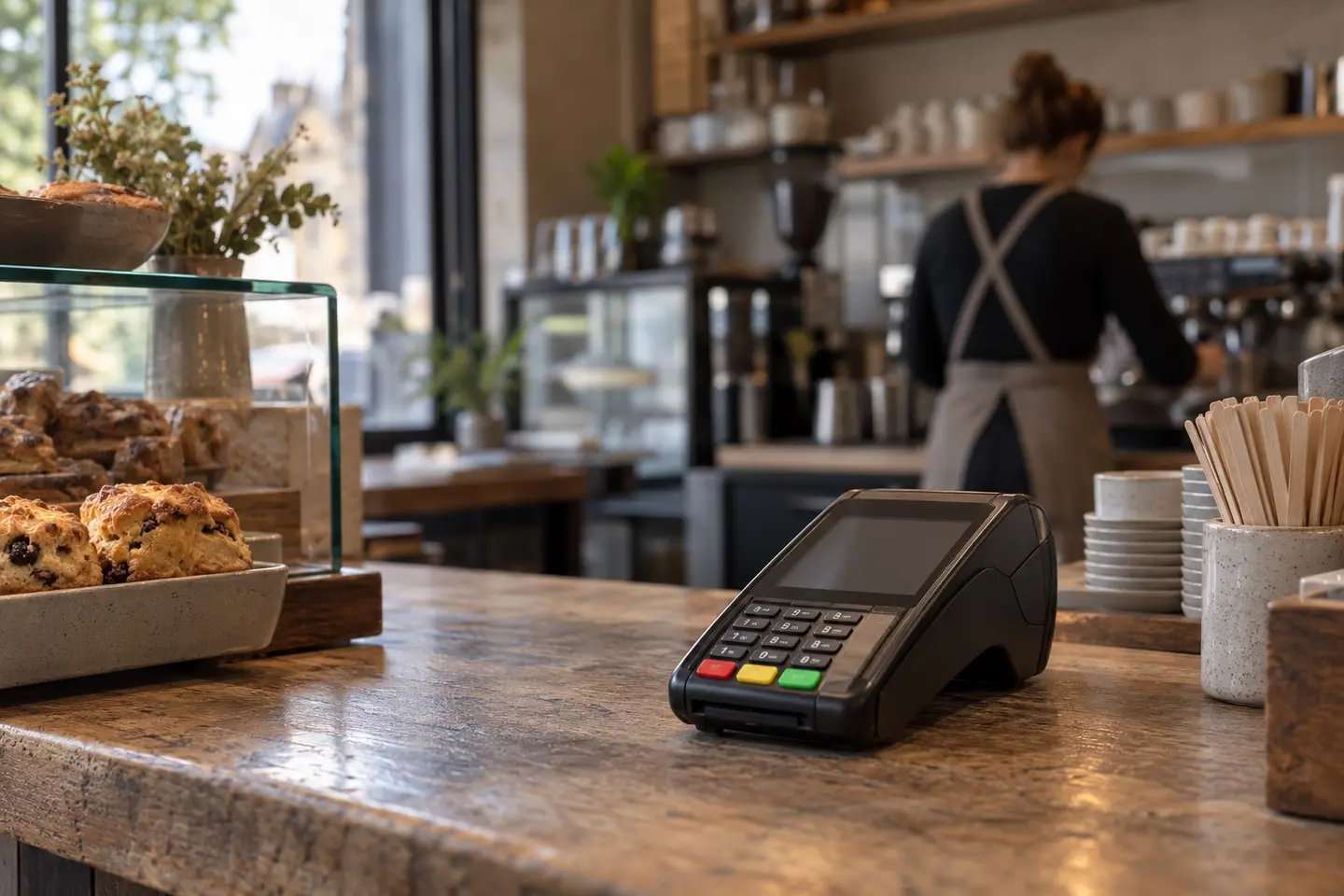
I stopped at a suburban café after seeing takeaway coffee advertised outside.
I ordered, took out my card and was told there was a £5 minimum spend.
Every hot drink on the menu cost less than £5.
No explanation. No apology. Just a nod towards a sign beside the till confirming the rule.
Fair enough. There it was in writing.
The problem was that I only wanted a coffee.
Unusually, I had a note in my wallet.
I could have paid with that. I could have added something I didn’t want. None of this was a major hardship.
But it was 2026, and the café’s payment system had somehow made buying one coffee difficult.
I paid with the note.
I also decided I probably wouldn’t go back.
And that’s where the economics get more interesting.
The cost you can see
There’s an entirely reasonable explanation for a £5 minimum spend.
Card processing costs money. Small transactions generate small margins. Somewhere along the line, somebody has probably looked at the fees and decided they don’t want to pay them on low-value purchases.
You can see the appeal.
A processing charge appears neatly on a statement. You can add up all those annoying little charges and discover exactly how much they cost you.
Lovely.
What doesn’t appear on the statement is the customer who decides the whole thing is a bit of a faff and quietly goes somewhere else next time.
I didn’t complain. I didn’t ask to speak to anyone. I didn’t leave a bad review.
From the café’s point of view, nothing happened.
That’s the problem.
The outside advertising had done its job. It had persuaded me to stop. The payment rule then did the opposite. It made the advertised purchase awkward at the point where it was supposed to happen.
Nobody records the coffee you didn’t sell
How many customers have seen the offer outside, come in, encountered the same rule and reacted as I did?
No idea.
Neither does the café.
That makes this kind of decision difficult because one side of the calculation is wonderfully precise and the other is almost invisible.
You can measure card fees.
You can probably measure abandoned transactions if staff record them. You might notice people adding a cake or bottle of water to get over the minimum.
What you can’t easily measure is the person who completes the transaction perfectly politely, leaves and mentally crosses you off the list.
There’s no button on the till for customer paid but won’t be back.
And yet, commercially, that may matter rather more than the processing fee the rule was designed to avoid.
One customer reacting that way proves very little. But it’s enough to make the underlying calculation worth revisiting.
Perhaps the wrong problem is being solved
Customer behaviour around payments has changed considerably.
Buying one coffee with a card is no longer an unusual request. It’s about as conventional as transactions get.
So if accepting that payment genuinely doesn’t work economically, there are other things an operator can examine before asking the customer to solve the problem.
Start with the card processing deal.
Are the rates still competitive? Has anyone checked recently, or is the business paying charges agreed when card payments looked rather different?
Then look at pricing.
If payment processing is simply part of the cost of selling a coffee, perhaps it belongs in the price of the coffee alongside milk, electricity, wages and everything else required to get it across the counter.
A small adjustment spread across the menu may be considerably less noticeable than a restriction appearing at the exact moment somebody is trying to pay.
Or perhaps, once the actual numbers are examined, the operator decides to absorb the charge.
The answer will depend on the business.
But “minimum £5” isn’t the only available answer.
Then there’s the sign
The café had at least made the rule visible.
But the interaction still amounted to a member of staff pointing towards a sign explaining why I couldn’t complete an ordinary transaction in the ordinary way.
That’s worth noticing.
The café had already put a different message outside: takeaway coffee available here.
The two messages were not exactly working together.
Signs are useful. But sometimes a sign exists because the same awkward conversation happens often enough that somebody got tired of having it.
That makes the sign operational information.
If staff regularly have to explain, defend or point towards a rule, the question isn’t only whether they’re communicating it properly.
It might be worth asking why the conversation needs to happen so often in the first place.
The awkward economics of invisible costs
None of this means every café should immediately abolish its minimum card spend.
It means the calculation needs to include more than the number on the merchant statement.
Review the processing supplier. Work out the real cost of accepting the transaction. Consider whether prices should absorb it. Notice how often staff have to intervene because of the rule.
And compare that with the promise being made outside.
If the sign brings people in for a coffee, but the payment rule makes buying one inconvenient, the business may be spending money to attract customers and then creating friction when they arrive.
Those things can be examined.
Then remember the thing you can’t examine quite so easily.
The customer who doesn’t complain.
The customer who pays.
The customer who leaves.
And the customer who, next time they fancy a coffee, goes somewhere else.
Saving a few pence is easy to measure.
Knowing what you spent to save it is rather harder.