
Push or Pull?
Two identical doors stood between us and a busy bar. Finding the right way in took several attempts.
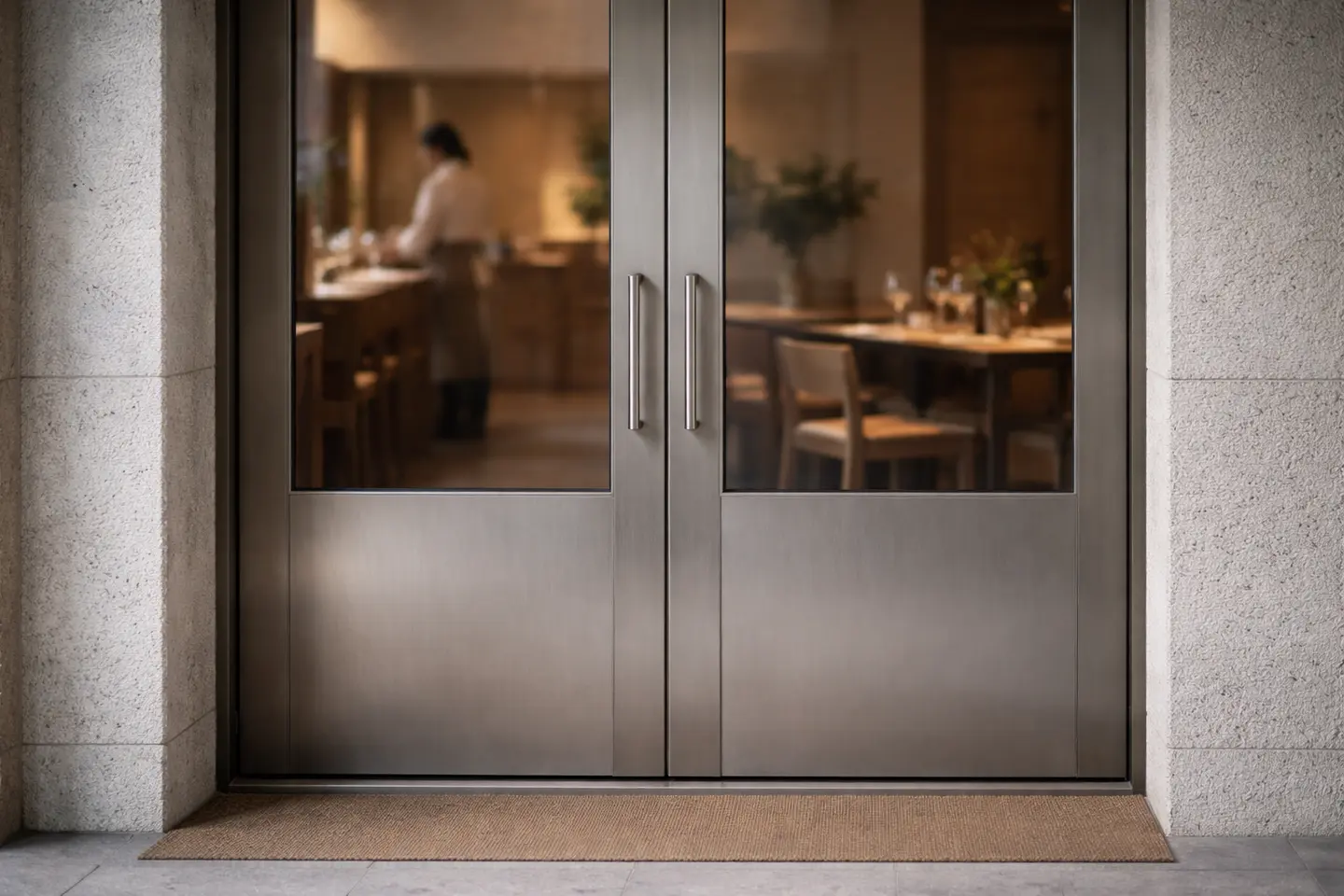
It was a busy Saturday evening. Through the glass, the bar looked warm, lively and inviting.
Getting inside was slightly more complicated.
Two identical doors sat side by side. The person in front of us chose one and pushed.
Nothing.
They tried the other.
Still nothing.
Then came the bit anyone who has encountered a confusing entrance will recognise: another push, a tentative pull, a glance at the handle and a quick look around to see whether everyone else knows something you don’t.
Someone behind offered a suggestion.
Eventually, the correct combination of door and direction was discovered and we all got in.
The entire episode probably lasted five seconds.
But five seconds is surprisingly long when you’re losing an argument with a door.
The door shouldn’t be a guessing game
There was nothing obviously wrong with the entrance.
Both doors worked. The handles worked. Nobody had accidentally installed them upside down. Once you knew which door to use and which way it opened, the system was perfectly straightforward.
That last sentence is doing quite a lot of work.
Because the operator already knew.
Staff knew. Regulars knew. Anyone leaving the building had presumably worked it out.
The only people who didn’t know were the people arriving for the first time.
And they were the ones the entrance was supposedly for.
The problem wasn’t the door
No operator deliberately designs an entrance to make customers look mildly foolish in front of strangers.
There may have been perfectly reasonable reasons for the arrangement. Perhaps both doors were needed at busy times. Perhaps symmetry mattered to the frontage. Perhaps sticking PUSH on one side and PLEASE USE OTHER DOOR on the other would have looked awful.
But whatever the reason, the physical setup had created a rule without communicating it.
Use this door.
Move it this way.
That’s a system.
If the customer has to discover the system by trial and error, it’s an incomplete one.
The fix might be a sign. It might be changing a handle, keeping one door obviously closed or simply making the active entrance visually dominant.
The interesting question isn’t really whether the door should say PUSH.
It’s whether people keep pushing when they should pull.
Watch what people actually do
Entrances are particularly good at exposing this kind of thing because customers haven’t learnt anything yet.
Five minutes later, they may know that you order at the bar, the toilets are upstairs and the little table by the window is actually reserved despite having no sign on it.
At the entrance, they’re starting from zero.
Which makes it a useful place to watch people.
Do newcomers reach for the wrong door? Do they stop just inside and look around for somebody to tell them where to go? Does a “Please wait to be seated” sign leave them standing in a place nobody behind the bar can actually see?
The temptation is to dismiss these moments because people eventually work it out.
And they do.
But “customers eventually work it out” is quite a low standard for a system.
Familiarity hides bad instructions
This is the same problem we saw with the Wi-Fi password.
Once you know how something works, it becomes surprisingly difficult to see why anybody else would find it confusing.
The owner has opened that door thousands of times. The team does it several times a day. Regulars don’t even consciously choose a door anymore.
So asking staff whether the entrance is obvious probably won’t tell you very much.
Watching ten people arrive might.
That’s the useful distinction. Don’t test the system with people who already know the answer.
Test whether somebody who has never been there before can work it out without stopping to think.
The best entrance is fairly boring
Nobody is going to write a glowing review because the front door opened in the direction they expected.
There’s no sensible calculation that says changing a handle will increase Saturday-night revenue by 3 per cent.
That’s not the point.
A good entrance simply allows the experience to begin without making itself part of the experience.
The guest sees the room, opens the door and walks in.
No hesitation. No little performance with the handle. No stranger behind them saying, “I think you have to pull it.”
And that principle travels surprisingly well.
If customers regularly stop in the same place, ask the same question or make the same mistake, don’t immediately assume they aren’t paying attention.
Look at what the environment is telling them.
Then watch somebody encounter it for the first time.
Because if people keep getting a simple thing wrong, it’s worth asking whether the problem is really the people.