Hi, I’m Chris. I’m the customer at Table Six.
Not the loudest guest. Not the most demanding. Just the one watching how the system reveals itself… who sets the tone, who sustains it, whether the next step is assumed or negotiated, whether standards are embedded or left to interpretation.
I can spot when the system is defined. And when it begins to drift.
Where This Perspective Comes From
Before turning my attention to hospitality, I built and ran an online manufacturing business that grew to more than £3m in annual revenue and employed over 30 people. Its growth was not accidental. It came from systems.
We learned early that friction compounds. An unclear instruction becomes a delay. A delay becomes a workaround. A workaround becomes the new normal. The new normal reshapes the experience.
If you do not deliberately define how something works, it will still work … just not in the way you intended.
When something felt off, we treated it as a systems question before a people problem. That discipline allowed the business to scale without the experience unravelling. Clarity was protected as the team grew.
After selling the company, I became increasingly interested in how the same forces operate in physical hospitality. Restaurants, cafés, bars, hotels and other independent venues built with care and ambition, yet often running on inherited or evolving operating rules.
Hospitality rarely deteriorates because people stop caring. It drifts when definitions loosen. And it excels when those definitions hold.
Standards soften. Scripts blur. Context replaces clarity. Flexibility increases. Definition decreases.
When the reverse is true, the room feels different. Standards remain light but deliberate. Flexibility sits on top of structure. Definition protects experience.
Why Still or Sparkling Exists
In hospitality, “still or sparkling?” is a small ritual. A clear binary. A visible decision point. It establishes expectation before ambiguity has the chance to enter. But beneath the literal question sits something structural.
Every service interaction contains its own version of that choice. Defined or assumed. Standardised or situational. A rule or a habit.
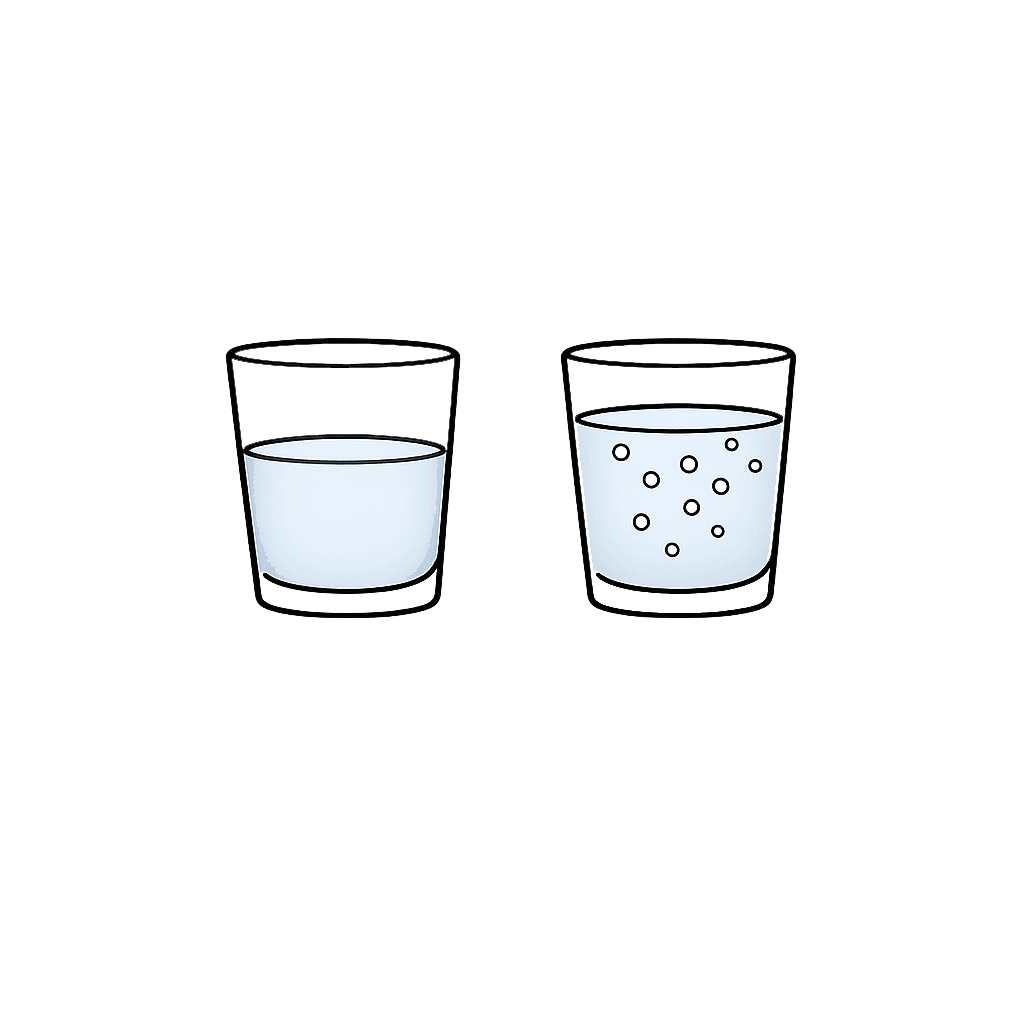
Still represents definition. Clear standards. Shared understanding. A stable base that does not rely on memory or mood.
Sparkling represents personality. Energy. Adaptation. Expression.
Both are essential. But they are not interchangeable. Sparkle is what guests notice. Stillness is what allows it to be consistent.
Most independent operators pursue sparkle because it feels visible. Guests, however, depend on stillness underneath it. Still or Sparkling is where I examine those underlying definitions. Not to criticise. Not to consult. But to surface the quiet system decisions shaping guest experience every day.
From table six, I look for the decision points. The moments where clarity holds … and where it has begun to soften. Experience does not drift by accident. It follows the systems that produce it.
And when stillness is deliberate, sparkle feels intentional.
